
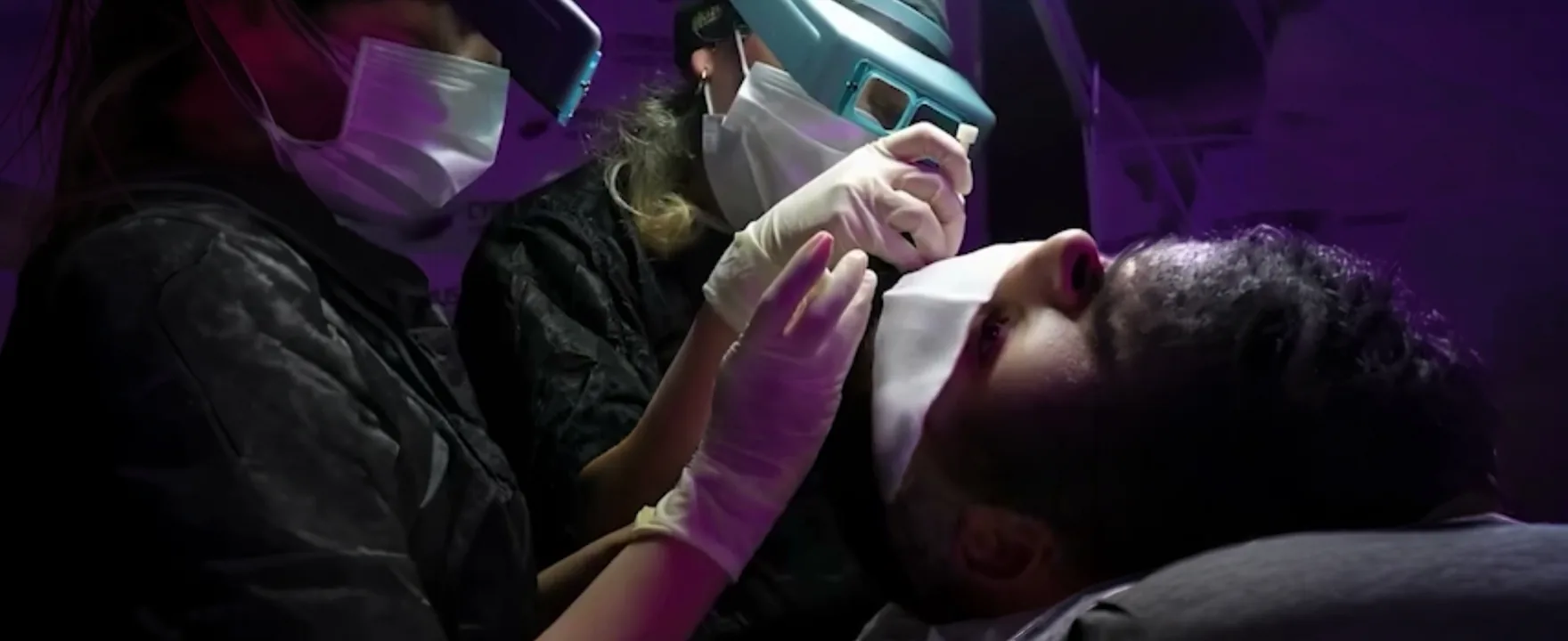
With a DHI (direct hair implantation) hair transplant, grafts taken from the donor area are transferred to the thinning area without delay. That one feature minimises the risk of damage, because the follicles are never left waiting outside the body. At Cyprus Hair Center in Nicosia, North Cyprus, DHI is performed with Choi implanter pens, and it is often the technique of choice when you want to keep your hair long.
How a DHI hair transplant works
The implanter pens penetrate the skin and place the graft directly into the channel in a single movement. Grafts loaded into the pen are carried precisely to where they are needed, which raises placement quality and makes the density patients want achievable. Because the hair does not have to be shaved, most people return to daily life quickly.
How the DHI procedure is performed
- Local anaesthesia. The donor and recipient areas are numbed first, so nothing is felt during the procedure.
- Extraction. Follicles are collected one by one with a purpose-designed instrument.
- Loading the pen. Each graft is loaded into a Choi implanter pen.
- Implantation. The pen enters the scalp at the planned angle and places the graft in one step, with no separate channel-opening stage.
The surgeon's experience matters enormously here, because the pen has to enter the scalp at the correct angle for the result to succeed. Done properly, the technique allows dense implantation and therefore fuller-looking hair.
Why graft survival is higher with DHI
DHI is chosen for one clear reason: extracted grafts are implanted immediately rather than held. Carefully extracted follicles are not outside the body long enough to be damaged, and they go straight into channels created by the pen itself. Graft survival rises accordingly, and there is less bleeding and tissue trauma than when channels are opened first.
Who a DHI hair transplant suits
DHI suits most men and women with hair loss or thinning whose donor area can supply the grafts they need. The possibility of a transplant without shaving is what draws most patients to it, and it works particularly well on the front hairline and on localised thinning, where grafts can be placed between existing hairs.
If keeping your hair uncut is the priority, read about our unshaven DHI hair transplant. Women are usually treated with a dedicated female hair transplant without shaving.
Before your DHI hair transplant
Choosing the right surgeon and clinic is the decision that most affects your result, so make it carefully. Your hair structure is analysed beforehand and the required graft count determined. Blood-thinning medication should be paused only as your doctor advises, and smoking and alcohol avoided so recovery is faster. In the week before the operation, cut back on coffee and green tea as well.
Recovery and results after DHI
Because the pen creates its own channel as it places each graft, scabbing is generally finished within 5 to 7 days, which is why many patients plan around a week. The transplanted hairs shed temporarily in the first weeks, which is completely normal.
New hair appears from month 3, and the permanent, natural and dense result is in place by around 12 months. If you are still weighing up techniques, our sapphire FUE hair transplant page explains the main alternative.
Book your personalised hair analysis
For a permanent answer to hair loss, start with a personalised hair analysis. Message the Cyprus Hair Center team on WhatsApp with a few photographs and we will give you a straight assessment of what a DHI hair transplant can realistically achieve for you.
You may also want to compare the sapphire FUE hair transplant, read about unshaven DHI hair transplant if you would rather not cut your hair, or look at women's unshaven hair transplant.