
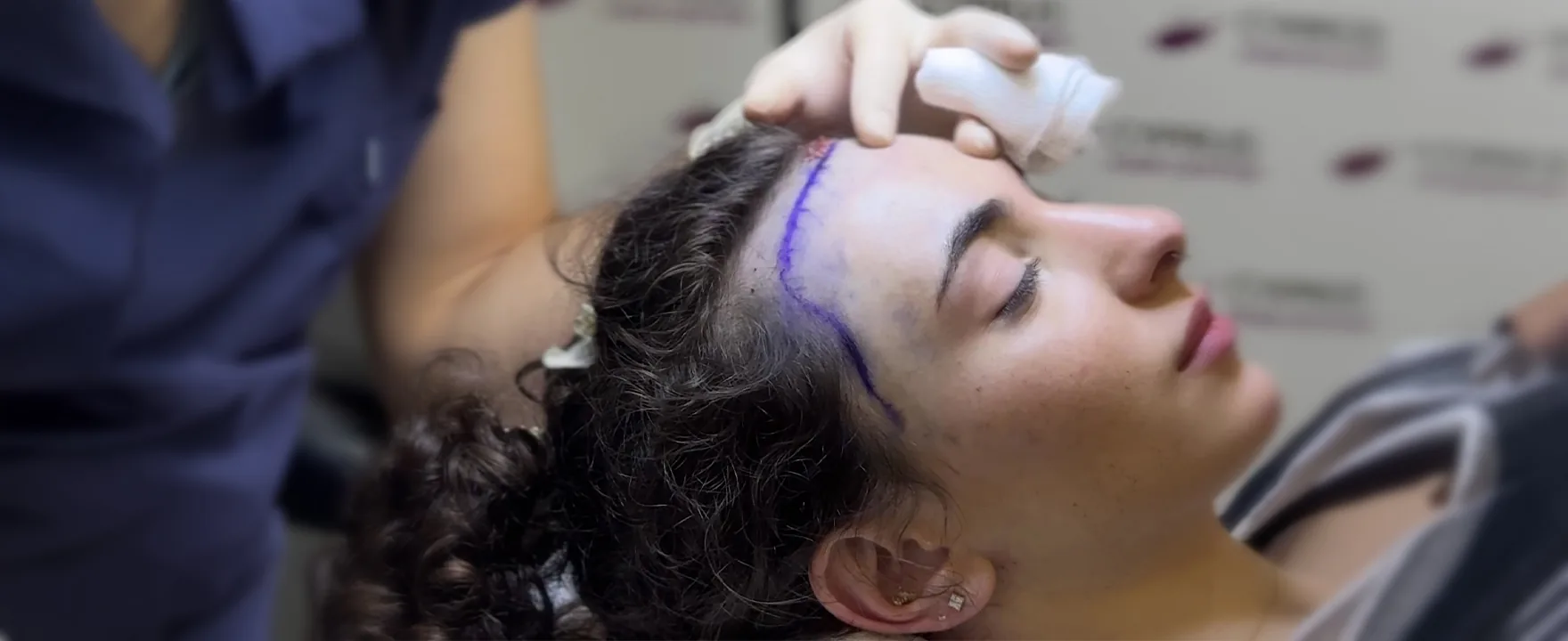
Women experience hair loss just as men do. Thinning across the upper part of the head in particular can cause real distress, affecting a woman both psychologically and socially. With today's techniques, thick and full hair is no longer out of reach: a female hair transplant can be performed successfully, and without shaving. At Cyprus Hair Center in Nicosia, North Cyprus, it is planned individually for every patient.
How a female hair transplant is performed without shaving
Women mostly prefer unshaven techniques. Without cutting the hair in the recipient area, the thinning areas are carefully filled. The target area is determined first, then strong follicles are collected from the donor region and placed between your existing hairs, usually with the DHI technique. Only a small window at the nape, hidden beneath your longer hair, is prepared, and the hair above it covers it completely.
Women are in some ways better placed than men here: the pattern is usually thinning rather than complete loss, so the affected areas can be filled to the density you want. Female cases also tend to need fewer grafts than male ones, often 1,500 to 3,000, because the goal is blended density rather than covering a bare area. The exact number comes from your donor measurement.
Lowering a high or wide hairline
Alongside general thinning, a high or wide front hairline is one of the most common reasons women come to us. An aesthetic hairline suited to your facial features and to female anatomy is designed with you before the procedure begins, and the grafts follow the angle and direction of your existing hair.
What causes hair loss in women?
Genetic and hormonal factors come first. With female pattern loss the thinning appears gradually at the crown, and an unwelcome widening becomes visible along the parting line. Beyond genetics, certain illnesses and medications can also cause shedding, as can nutritional problems such as low iron and other vitamin or mineral deficiencies. Skin conditions, cosmetic products, stress and tension all contribute.
Can women have a hair transplant?
Yes. There is no gender distinction in hair transplantation; what matters most is being treated by a specialist in the field. Strong follicles taken from the nape can be successfully moved into thinning areas. Because hair loss in women can have a treatable cause, blood work is part of the assessment before any date is confirmed.
Before and after the procedure
A preliminary examination comes first. It establishes whether you have any medical condition and whether you are suitable for the procedure, identifies the donor area, and decides the method to be used. Before the operation, blood-thinning medications and supplements should be paused on your doctor's advice. If you use minoxidil, it is usually paused for a short window around the operation and then resumed.
The period after the procedure matters just as much. Newly transplanted follicles are fragile and must be protected from impact and strenuous activity. The hair should not come into contact with water for the first three days. The micro-scabbing stays hidden among your hair and sheds within 7 to 10 days. Take the medication your doctor prescribes regularly, sleep on your back so the grafts settle properly, and use only the shampoo recommended to you when washing begins. Hold off on colouring, heat styling and tight ties until your medical team clears you, usually around week four to six.
Supporting your hair afterwards
Products used on the hair should be good quality and carry the vitamins and minerals hair actually needs. Hair mesotherapy is a useful supportive treatment here: with professional help, the specific deficiencies affecting your hair are identified and the supporting treatment is matched to them.
What your day looks like
- Photos and blood work. You send photos; we review them and request blood tests before any date is confirmed.
- Design. Part line, temple points and hairline are drawn with you at the mirror, and the donor window is planned to stay hidden.
- Implantation. Unshaven DHI, placed between existing hairs, finer and slower than a male case by design.
- 12-month follow-up. Photo check-ins at months 1, 3, 6 and 12 with your medical team.
Results
New, strong hair starts to come through from the third month, and by around 12 months you reach the fuller look you were aiming for. The results bring high satisfaction and real psychological relief, lifting self-confidence and how comfortable you feel socially. If you would like to keep your full length visible on the day, ask about a long hair transplant; the technique behind most female cases is the unshaven DHI hair transplant.
Book your free hair analysis
To get fuller hair without compromising on your length or your style, contact the specialist team at Cyprus Hair Center and arrange your free, personalised hair analysis. Send a few photographs over WhatsApp and we will give you an honest assessment.
You may also want to read about unshaven DHI hair transplant, the long hair transplant technique, or hair and face mesotherapy for supporting hair quality.