Exosomes are tiny vesicles that cells release to carry signals, such as growth factors, peptides and genetic messengers, from one cell to another. In exosome therapy for hair, a laboratory-prepared solution of exosomes derived from stem cells is applied to the scalp so that those signals reach follicles that have weakened and begun to produce thinner hair. At Cyprus Hair Center in Nicosia, North Cyprus, we use exosome therapy for both the scalp and the skin.
The treatment contains no cells: nothing is transplanted, and nothing grows where nothing lives. What it aims to do is change the environment around a struggling follicle so it can work better.
What exosome therapy involves
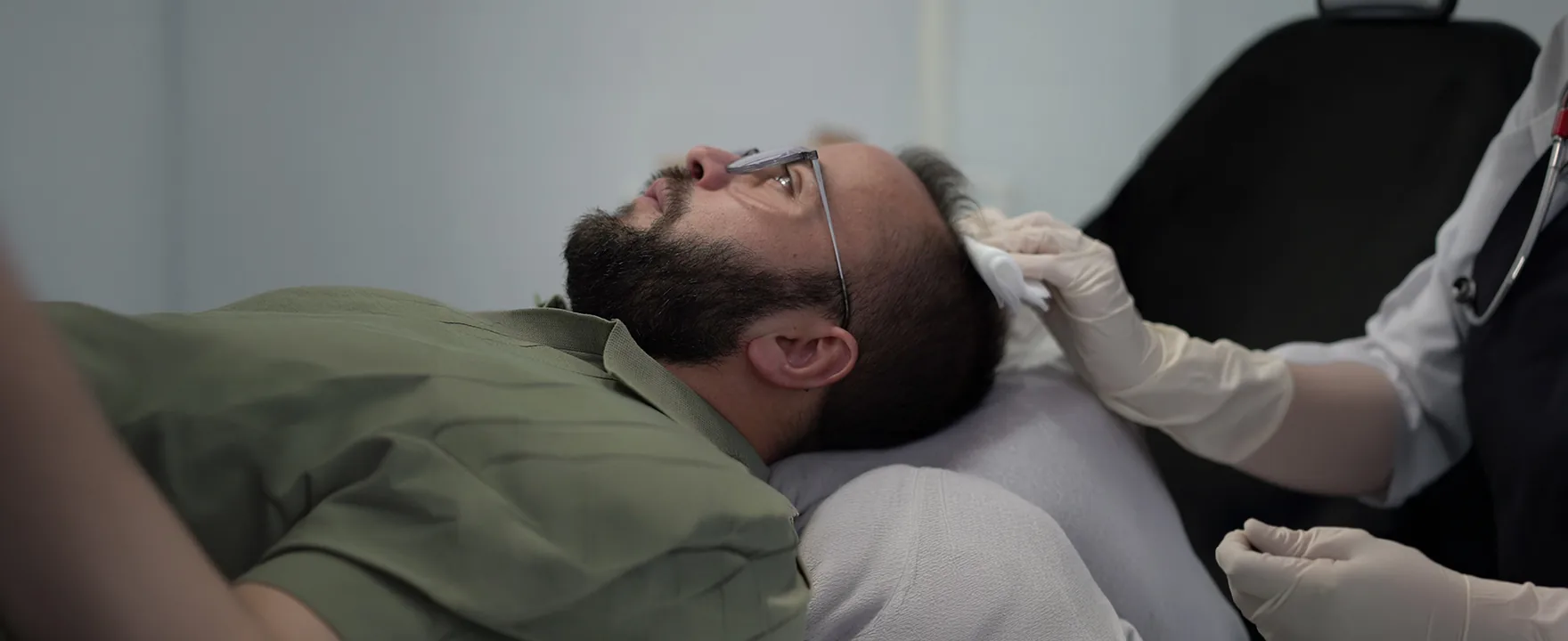
The prepared exosome solution is applied to the scalp by micro-injection with very fine needles or by microneedling, so it penetrates evenly. The scalp is cleaned first, and the application itself is quick.
Which areas are treated, how much is applied and how many sessions are planned depend on the pattern and stage of your hair loss, established at the assessment rather than taken from a fixed protocol.
How an exosome session runs
Sessions begin with photographs and a scalp examination, so there is a baseline to compare against. After cleansing, the solution is applied across the thinning areas.
A session takes around 20 to 30 minutes. There is no downtime: most patients return to their day immediately, and some simply prefer to leave the scalp untouched until the following morning.
Before and after exosome therapy
Beforehand, we look for a treatable cause behind the shedding, such as iron, thyroid or hormonal problems, because exosomes address the follicle, not what is upsetting it. We also discuss expectations plainly: this is a supportive treatment with encouraging early studies, not an established cure.
Afterwards, keep the scalp dry for the rest of the day and avoid heavy sweating, swimming and harsh products for 48 hours. Mild redness or tenderness at the application points settles within a day or two.
What exosome therapy can do for hair
- Supports follicles that are weakened but still producing hair
- Helps thinning areas look denser as miniaturised hairs improve
- Helps reduce shedding over the course
- Improves the scalp environment around the follicle
- Supports graft healing when used after a hair transplant
- Is cell-free, so no donor material of your own is required
Exosome therapy for the skin
Applied to the face, neck and décolletage, the exosome complex is intended to prompt the skin's own renewal. It is used to support collagen and elastin, to help with fine lines, pigmentation, redness and uneven texture, and to help the skin hold moisture for a more natural glow. As with the scalp, results vary from person to person.
How treatment is structured
- Assessment. Scalp or skin examination, photographs and, where needed, blood work to confirm exosome therapy is appropriate.
- Initial course. Typically two to three sessions, four to six weeks apart, each around 20 to 30 minutes.
- Review. Photographic comparison at three to six months to judge whether shedding has reduced and density improved.
- Maintenance. A further session every six to twelve months if the initial course produced a measurable benefit.
Exosome therapy is often combined with hair mesotherapy, and it can support the grafts after a sapphire FUE hair transplant.
Book your personalised exosome assessment
To find out whether exosome therapy makes sense for your hair or your skin, contact the Cyprus Hair Center team in Nicosia and book a personalised exosome assessment. We will explain what the treatment involves, what it is realistically likely to do for you, and what the alternatives are.