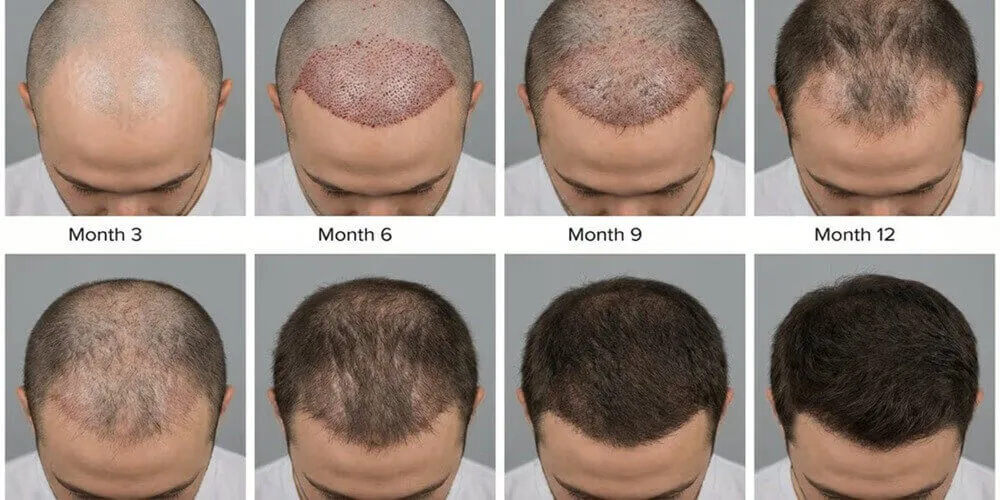
Where you have a hair transplant shapes more than the price. It shapes which technique you are offered, who actually holds the instruments, the sterilisation standards around you, how natural the hairline reads a year later, and how the recovery feels while you live through it. So the Turkey-or-Cyprus question is worth asking properly — and worth answering honestly, including by a clinic that obviously sits on one side of it.
What Turkey does well
Turkey earned its reputation. There are many clinics to compare, pricing is competitive, package logistics are polished, and the sheer volume of procedures has built deep experience in FUE and DHI. For a well-researched patient with time to separate the excellent clinics from the rest, Turkey offers real choice at accessible entry prices.
Volume is also the risk. Quality varies enormously between clinics, and the mass-production end of the market runs on throughput: several patients a day per team, and procedures led largely by technicians while a physician supervises from a distance. None of that is visible in a result photo taken at month twelve.
What Cyprus does differently
North Cyprus runs at boutique scale. Fewer clinics, fewer patients per day, and — in a clinic run properly — the physician who plans your hairline stays present through the operation itself. The environment is calmer, sterility is easier to control at low volume, and planning is personal because it can be.
The honest limitations: there are fewer clinics to choose between, and pricing sits in the mid-to-premium band rather than at the entry level. Cyprus does not compete on being cheapest; it competes on the ratio of what you pay to what you get.
The cost comparison, without the numbers
We keep prices off this site deliberately — a real quote needs your donor measurement, not a menu. But the structure of the market is fair to describe: Turkey spans a very wide price range with low starting points, and the low end is low for reasons that matter. Cyprus prices are steadier and start higher. If budget is the deciding constraint, Turkey wins the entry price. If you are comparing what a mid-range budget buys in each country, the calculation changes.
The result depends on the clinic, not the country
A passport stamp has never grown a graft. In both countries the outcome is decided by the same things: who examines you, how the graft count is planned against your donor supply, the angle and depth of each incision, and whether anyone is still answering your messages at month six. The timeline is identical everywhere — shedding in the first weeks, visible growth around month six, the final result at twelve months.
Which suits you?
- Turkey suits you if budget leads the decision, you enjoy comparing many options, and you have the time and patience to vet clinics rigorously.
- Cyprus suits you if you want a controlled, personal process, direct access to the physician who planned your case, and a quiet place to recover — and you are willing to pay mid-market for it.
Five questions to ask either way
Wherever you book, ask these before you commit: Who performs the extraction and implantation, and what are their qualifications? How was my graft count planned, and against what donor measurement? Is the clinic licensed, and by whom? Can I see before-and-after cases at twelve months, photographed consistently? What does follow-up look like after I fly home?
A clinic that answers all five plainly is worth considering in either country. That standard applies to us as much as to anyone — ask us the same questions.
This article is general information written by our medical team and is not a substitute for individual medical advice. Please consult a physician about your specific situation.

Cyprus Hair Center
Written by our medical team. Every procedure at Cyprus Hair Center is performed by experienced specialists in line with international standards, and carries a lifetime warranty certificate.